

Sustainable Nutrition Habits for Women Over 40
Quick Summary
Sustainable nutrition habits for women are small, repeatable choices that still work on busy or tiring days, rather than strict diets that rely on restriction. Build a default around protein, vegetables and a whole-food carbohydrate, and let it guide everyday meals without constant decision-making.
- Build each plate around protein, then vegetables, then a whole-food carbohydrate
- Aim for palm-sized protein portions at every meal, not just dinner
- Pair plant iron with vitamin C, such as peppers or citrus, to improve absorption
- Plan three default breakfasts, lunches and dinners, then rotate them
- Change one habit at a time and keep it for two weeks before adding another
Table of Contents
- Why Sustainable Nutrition Habits Matter More Than Quick Diets
- Building Balanced Meals From Nutrient-Dense Foods
- Choosing Protein Sources, Plant and Animal
- Good Food for Women's Hormones Across Life Stages
- Getting Enough Iron, Calcium and Other Key Nutrients
- Healthy Diet for Female Weight Loss Without Restriction
- Sustainable Eating Habits for Busy Women
- Budget-Friendly Meal Planning and Simple Habit Building
- Your Next Step: Starting With One Habit This Week
- Frequently Asked Questions
Why Sustainable Nutrition Habits Matter More Than Quick Diets
Last Updated: November 19, 2026
Most women over 40 have tried a quick diet at least once, and most have watched the weight come back within months. That pattern is not a personal failing. It is what happens when a plan asks for more discipline than a busy life can supply. Sustainable nutrition habits for women take the opposite approach: small, repeatable choices that still work on the worst week of the month, during a deadline, or when the kids are sick. Eating is one part of a larger routine that includes strength work, sleep and stress, because changing one piece in isolation rarely lasts.
The reason quick diets fail is simple. They rely on restriction, and restriction is hard to keep up when your schedule is already full. A habit that takes two minutes to repeat each day will outlast a plan that requires you to weigh every meal. Your goal is a way of eating you can still follow in a year, not a short stretch of willpower.
Here is the core idea: you do not need perfect meals, you need a default. A default is what you eat when you are tired and unplanned. If that default is built from protein, vegetables and a whole-food carbohydrate, most of your nutrition takes care of itself without constant decision-making.
Building Balanced Meals From Nutrient-Dense Foods
A balanced meal is easier to build than most guides suggest. Start with a palm-sized portion of protein, fill half the plate with vegetables or fruit, and add a fist-sized portion of whole grains or starchy food. Add a thumb of healthy fat, such as olive oil, nuts or avocado, and you have a complete meal. This structure works whether you are cooking from scratch or assembling leftovers.
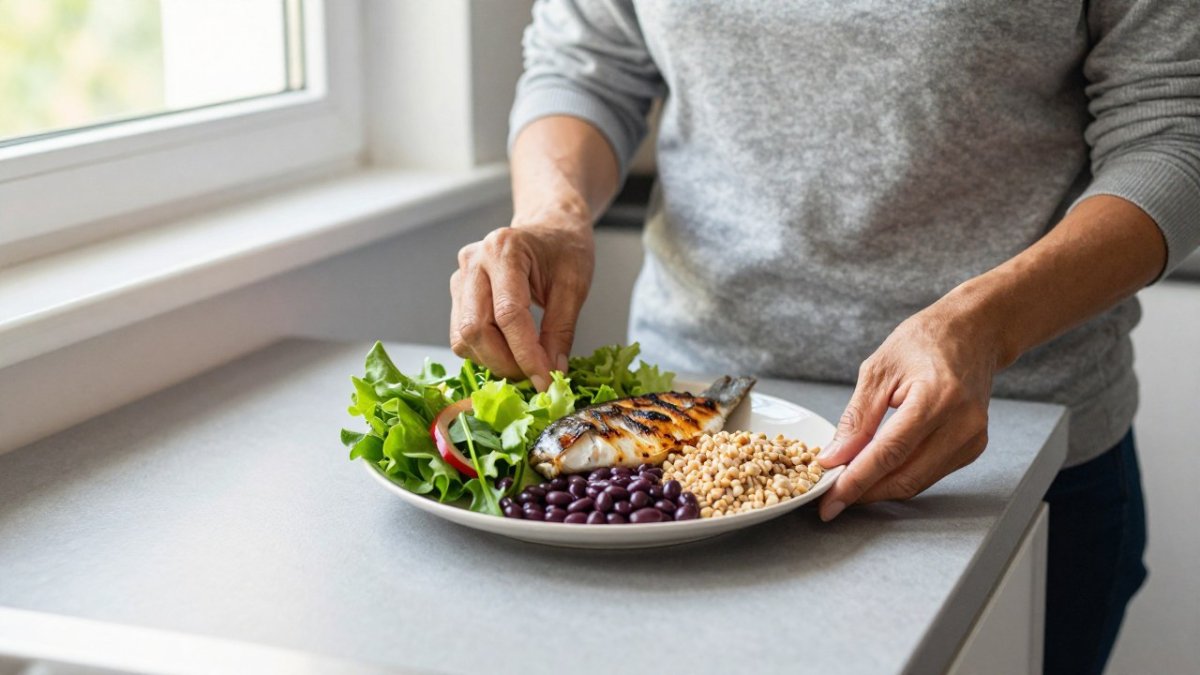
Nutrient-dense foods deliver more vitamins, minerals and fibre per calorie than heavily processed alternatives. Leafy greens, berries, legumes, eggs, fish and whole grains all fall into this group. The practical advantage is that these foods keep you fuller for longer, which makes it easier to stop eating without tracking every bite.
- Build each plate around protein, then vegetables, then a whole-food carbohydrate
- Keep frozen vegetables and canned beans on hand for fast weekday meals
- Choose whole grains such as oats, brown rice or quinoa over refined versions most days
The most common mistake is treating vegetables as a side dish. When they become the bulk of the plate, portion control becomes much less of a struggle.
Choosing Protein Sources, Plant and Animal
Protein supports muscle maintenance, which matters more after 40 as muscle mass gradually declines. Both animal and plant sources can meet your needs, and the right mix depends on your preferences, budget and health goals. Lean meats, fish, eggs and dairy provide complete protein. Legumes, tofu, edamame, nuts and seeds offer protein too, though many plant foods are lower in one or more essential amino acids, so varying your sources across the week helps.
If you are building muscle as well as eating well, aim for protein at every meal rather than loading it all into dinner. Spreading intake across the day tends to be easier to sustain than one large serving.
Good Food for Women's Hormones Across Life Stages
Nutrition needs shift as women move through menstruation, pregnancy, postpartum, perimenopause and menopause. Hormonal changes can affect appetite, energy, sleep and how the body stores fat, so the same plan may not suit every stage. The consistent principles still apply: enough protein, plenty of fibre, healthy fats and regular meals. What changes is where to put your attention.
Menstruation. Iron losses rise during bleeding, so this is the stage to prioritise iron-rich foods: red meat, lentils, chickpeas, spinach, fortified cereals and tinned fish. Pair plant iron with vitamin C, peppers, citrus, tomatoes, because that combination improves absorption. Many women also notice cravings for sugary or salty food in the days before their period; regular meals with protein and fibre at each sitting tend to blunt those swings more effectively than trying to ignore them.
Pregnancy. Energy and nutrient needs increase, particularly for folate, iron, calcium, iodine and omega-3 fats. Folate is found in leafy greens, legumes and fortified grains; iodine in dairy, fish and iodised salt; omega-3 fats in oily fish such as salmon, sardines and mackerel. Food safety matters as much as food choice here: avoid unpasteurised dairy, raw or undercooked meat and fish high in mercury, and speak with your midwife or doctor before taking supplements.
Postpartum. Recovery, sleep disruption and, for breastfeeding mothers, the energy cost of milk production all raise demands. Protein at every meal supports tissue repair, and calcium and vitamin D support bone health through a period when bone density can dip. Keeping one-handed snacks available, boiled eggs, yoghurt, nuts, fruit with nut butter, is often more useful than a perfect meal plan, because the barrier is time rather than knowledge.
Perimenopause. Many women notice that blood sugar swings feel more intense and that sleep and mood are less stable. Pairing carbohydrates with protein and fat helps smooth out those peaks. Foods rich in omega-3 fats, such as oily fish, flaxseed and walnuts, are commonly included in guidance for this stage. Protein intake becomes more important as muscle mass gradually declines, and calcium and vitamin D remain central to bone health.
Menopause and beyond. The same priorities continue: protein for muscle, calcium and vitamin D for bone, fibre for heart and gut health, and healthy fats for cardiovascular support. Appetite often falls while nutrient needs stay similar, so nutrient-dense foods earn their place more than ever. When appetite is lower, making protein a consistent part of nutrient-dense meals can help support muscle, a priority Thrive Health Solutions connects with nutrition through menopause.
Nothing here replaces medical advice. If you have symptoms that are disrupting your life, speak with a healthcare provider before making major dietary changes. Individual needs vary, and a clinician can advise on your specific situation.
The article breaks down key foods and priorities at each life stage, which can be scanned quickly:
| Life stage | Priority | Key foods or notes |
|---|---|---|
| Menstruation | Iron-rich foods | Red meat, lentils, chickpeas, spinach, fortified cereals, tinned fish |
| Pregnancy | Folate, iodine, omega-3 | Leafy greens and legumes; dairy and iodised salt; oily fish |
| Postpartum | Protein and bone support | Protein at every meal; calcium and vitamin D; one-handed snacks |
| Perimenopause | Blood sugar and omega-3 | Pair carbs with protein and fat; oily fish, flaxseed, walnuts |
| Menopause and beyond | Muscle, bone and heart | Protein, calcium and vitamin D, fibre, healthy fats |
Getting Enough Iron, Calcium and Other Key Nutrients
Iron and calcium deserve particular attention. Iron needs are higher during the years of menstruation, and many women fall short through diet alone. Good sources include red meat, lentils, spinach and fortified cereals. Pairing plant-based iron with vitamin C, such as peppers or citrus, improves absorption.
Calcium supports bone health, which becomes increasingly important as bone density begins to decline with age. Dairy, fortified plant milks, tinned fish with bones, tofu and leafy greens all contribute. The exact daily target depends on age and life stage, so check current guidance from official health bodies such as the NHS guidance on calcium and iron or your national equivalent rather than relying on a single number from a generic chart.
Vitamin D and magnesium are also worth discussing with your doctor, especially if you spend little time outdoors or sleep poorly.
Healthy Diet for Female Weight Loss Without Restriction
Weight loss without restriction is possible, but it depends on changing the environment rather than fighting cravings. Increasing protein and fibre tends to reduce hunger naturally. Eating regular meals rather than skipping them can prevent the evening overeating that derails many plans. Keeping less healthy foods out of the house, rather than banning them outright, reduces the pressure that leads to bingeing.
Diet culture frames food as something to earn or punish yourself for. A sustainable approach treats food as fuel and pleasure, with room for foods you enjoy. Watch out: cutting calories too sharply often backfires, leaving you hungrier and more likely to abandon the plan within weeks. Moderate, consistent intake is more effective over time.
If you have a history of disordered eating, a non-restrictive plan should be guided by a registered dietitian or therapist who understands that history.
Sustainable Eating Habits for Busy Women
Busy schedules are the main reason healthy eating falls apart. The solution is to reduce decisions rather than add rules. Batch cooking one protein and two vegetables on Sunday gives you building blocks for five or six lunches. A slow cooker or sheet-pan dinner can cover two evenings with minimal effort.
Plan three default breakfasts, three default lunches and three default dinners, then rotate them. Familiar meals take less mental energy and are easier to repeat. Keep a list of simple protein snacks, such as boiled eggs, cheese with apple or hummus with carrots, for days when you have no time to sit down.
Pair these habits with short strength sessions to support muscle without a large time commitment. You can find a related plan in our guide to how to stay consistent with fitness: 7 steps that work.
Budget-Friendly Meal Planning and Simple Habit Building
Healthy eating does not require expensive ingredients. Dried beans, lentils, oats, frozen vegetables, eggs and seasonal produce are among the most affordable nutrient-dense foods available. Buying store-brand staples and cooking in larger batches usually lowers the cost per serving compared with ready meals.
Affordable staples to keep on hand. Build a pantry around a short list you will actually use: dried or canned lentils and beans, oats, brown rice, tinned tomatoes, frozen mixed vegetables, frozen berries, eggs, plain yoghurt, tinned fish, peanut butter, and a bag of onions and carrots. These cover protein, fibre, healthy fats and most micronutrients at a low cost per serving. Seasonal produce bought in larger quantities and frozen at home stretches the budget further.
Substitutions that protect the budget. Swap fresh salmon for tinned sardines or mackerel in omega-3 dishes. Swap pine nuts for sunflower seeds. Swap fresh spinach for frozen spinach in soups and curries. Swap chicken breast for chicken thighs or legumes in stews. None of these changes the nutritional shape of the meal much; they change the price.
A stepwise habit plan. Choose one change at a time and keep it for two weeks before adding anything else. A workable sequence is: week one, add a protein source to breakfast; week three, keep a prepared vegetable in the fridge; week five, plan three default dinners; week seven, batch-cook one protein on the weekend. Track whether the habit is still happening, not whether it is perfect. Reviewing progress once a week helps you spot which habits stick and which need adjusting.
Handling setbacks. A common pattern is that a single missed day turns into an abandoned plan. Treat a missed habit as information rather than failure: ask whether the habit was too large, too vague, or attached to a routine that no longer exists. Shrinking the habit, a boiled egg instead of a cooked breakfast, a handful of frozen vegetables instead of a chopped salad, usually restores it faster than starting over.
Watch out: building several new habits at once tends to collapse them all, because each one competes for the same limited attention on a busy day.
The Academy of Nutrition and Dietetics guidance on healthy eating patterns offers practical starting points if you want evidence-based templates to adapt.
Your Next Step: Starting With One Habit This Week
Pick one habit from this guide and start it this week. Add a palm-sized protein to breakfast, or fill half your lunch plate with vegetables. Keep it simple enough that you could repeat it on a bad day. Sustainable nutrition habits for women grow from small wins, not from overhaul. If you want to combine eating changes with a short, low-effort training routine, MVP-glow offers 10-minute band workouts designed for women over 40 with demanding schedules, and you can read more about building strength in our muscle-building plan after 40.
Frequently Asked Questions
What are the most sustainable nutrition habits for women over 40?
Focus on habits you can keep for years rather than weeks. Build most meals around vegetables, fruit, whole grains and a palm-sized portion of protein, and use olive oil or canola oil as your main fats. Eat protein at each meal to help preserve muscle as hormonal changes affect body composition. Keep a few reliable default meals, such as eggs with vegetables or a legume soup, so you are not deciding from scratch on busy days. Add variety over time, since different foods supply different nutrients. Small, repeatable choices tend to outlast strict rules.
What role does protein play in sustainable nutrition for women?
Protein supports muscle maintenance, which becomes more important with age, and it helps you feel full between meals, which makes steady eating easier. Good sources include eggs, fish, poultry, legumes, tofu, lentils, nuts and dairy. Aim to include a source at breakfast, lunch and dinner rather than loading it all into one meal. Plant and animal options can both work well when you combine them across the week. A simple rule is to fill a quarter of your plate with protein and check that each meal has one.
How do hormonal changes affect nutritional needs in women?
Across menstruation, pregnancy, postpartum, perimenopause and menopause, nutrient needs can shift. Iron needs are often higher during menstruation, and calcium and vitamin D matter more for bone health during and after menopause. Needs vary between individuals, so if you have heavy periods, fatigue or a diagnosed condition, a doctor or registered dietitian can check your levels and set targets for you. Food alone cannot correct every hormonal change, but a varied diet of nutrient-dense foods supports the body through each stage.
What are simple, sustainable meal prep tips for busy women?
Pick one prep session per week rather than daily cooking. Cook a batch of grains, roast a tray of vegetables and prepare one protein such as chicken, lentils or tofu. Store them in containers and mix them into different meals across the week. Keep frozen vegetables, canned beans and eggs on hand for quick meals. Choose two or three meals you enjoy and repeat them, which reduces decision fatigue and food waste. Adjust portions to your appetite rather than following rigid plans.
How can I build a healthy relationship with food without restrictive dieting?
Restrictive diets often lead to cycles of cutting back and overeating, which makes consistency harder. Instead, add nutrient-dense foods before removing anything. Allow foods you enjoy in regular portions, and limit added sugar, salt and processed meat through gradual swaps rather than bans. Pay attention to hunger and fullness cues, and avoid labelling foods as good or bad. If eating feels stressful, anxious or out of control, speak with a healthcare professional, as this can signal disordered eating that needs support.
What is a healthy diet for female weight loss that lasts?
A sustainable approach creates a moderate energy deficit through balanced meals rather than extreme cuts. Build plates around vegetables, lean protein and whole grains, keep healthy fats in moderate amounts, and limit ultra-processed snacks and sugary drinks. Regular movement, sleep and stress management also affect results. Expect gradual change, and track progress over months rather than weeks. Individual needs vary, so a professional can help tailor an approach to your health and goals.
How can I balance nutrition with a 10-minute daily workout routine?
Short workouts work best when meals support recovery. Eat a source of protein within a few hours of training, and include carbohydrates from whole grains or fruit to fuel sessions. Drink water throughout the day. Keep a simple breakfast or snack ready for the days you train. Consistency across weeks matters more than perfect timing, so focus on regular, balanced eating that you can maintain alongside your workouts.
